


Your vehicle’s headlights are far more than just a factory-installed convenience — they are the single most critical safety feature for nighttime driving, adverse weather conditions, and poorly lit roads. Auto headlight bulbs come in a wide variety of shapes, technologies, and brightness levels, and understanding the differences between them can literally mean the difference between a safe journey and a dangerous one. Whether you are restoring an older vehicle with original halogen housing or upgrading a modern car with LED or xenon projector lenses, choosing the right bulb involves more than picking the cheapest option off the shelf. In this comprehensive guide, we will break down every major headlight bulb type, decode confusing part numbers, compare technologies side by side, and give you actionable expert recommendations so you can make an informed decision with confidence.
Understanding Auto Headlight Bulb Types and Part Numbers
Every vehicle manufacturer specifies a particular bulb type for each headlight assembly, and these designations follow standardized naming conventions established by organizations like the ECE (Economic Commission for Europe) and SAE (Society of Automotive Engineers). Before you purchase any replacement or upgrade bulb, you need to identify the correct headlight bulb size for your specific make, model, and year. Common part numbers include H1, H4, H7, H11, 9005 (HB3), 9006 (HB4), 9012, D1S, D2S, and 880/881. Each of these corresponds to a unique base design, filament configuration, and electrical requirement, and installing the wrong type can result in poor beam patterns, fuse failures, or even damage to your vehicle’s wiring harness.
Halogen Headlight Bulbs
Halogen bulbs remain the most widely used headlight technology in the automotive world. They operate by passing electrical current through a tungsten filament enclosed in a halogen gas-filled quartz capsule. The halogen gas creates a chemical recycling process that redeposits evaporated tungsten back onto the filament, extending bulb life. Popular halogen variants include the H4 (dual-filament high and low beam in one bulb), H7 (single-filament), and H11. Halogen bulbs are affordable, widely available, and produce a warm yellowish light with a color temperature typically around 3,000K to 3,500K. However, they are relatively inefficient, converting only about 10% of their energy into visible light while wasting the rest as heat.
HID Xenon Headlight Bulbs
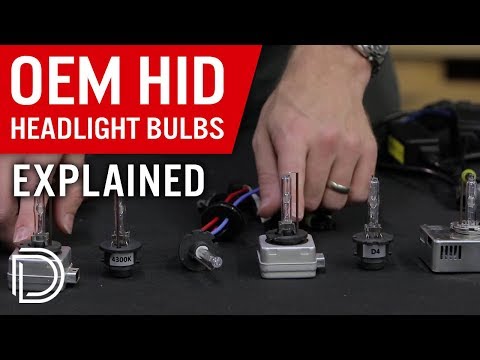
High-Intensity Discharge, or HID xenon bulbs, use an electric arc between two electrodes inside a pressurized bulb filled with xenon gas and metal salts. Unlike halogen bulbs, HIDs have no filament — they ignite a plasma arc that produces an intensely bright, bluish-white light. Common HID bulb types include D1S, D1R, D2S, D2R, D3S, and D4S. HID xenon headlights are known for their exceptional brightness, often producing 3,000 to 4,500 lumens per bulb, and their energy efficiency is significantly higher than halogen alternatives. Vehicles equipped with HID systems typically require a ballast to regulate voltage, and many newer models include auto-leveling and self-cleaning mechanisms to comply with federal regulations. The color temperature for stock xenon bulbs usually falls between 4,000K and 6,000K, producing a crisp white or light blue appearance.
LED Headlight Bulbs
Light Emitting Diode headlight bulbs represent the newest frontier in automotive lighting technology. LED bulbs use semiconductor diodes to produce light with remarkable energy efficiency and an exceptionally long lifespan, often rated at 30,000 hours or more. Modern LED headlight bulbs are available in retrofit kits designed to fit halogen housings, though direct OEM LED and laser-LED systems found in premium vehicles use carefully engineered reflectors and optics for precise beam control. Popular LED bulb sizes include H1, H4, H7, H11, 9005, and 9006. Many aftermarket LED bulbs feature built-in cooling fans or heat sinks to manage thermal dissipation, which is critical because excessive heat shortens LED lifespan and can melt bulb housings.
Headlight Bulb Technologies Compared
Choosing between halogen, HID xenon, and LED headlight bulbs depends on your budget, vehicle compatibility, driving conditions, and desired light output. The table below provides a detailed comparison to help you evaluate each technology against your specific needs.
| Feature | Halogen | HID Xenon | LED |
| Average Lumen Output | 1,000 – 1,500 lm | 3,000 – 4,500 lm | 2,000 – 5,000 lm |
| Color Temperature Range | 3,000K – 3,500K | 4,000K – 6,000K | 4,500K – 6,500K |
| Average Lifespan | 450 – 1,000 hours | 2,000 – 3,000 hours | 25,000 – 30,000 hours |
| Energy Efficiency | Low (~55W per bulb) | Medium (~35W per bulb) | High (~20W – 40W per bulb) |
| Startup Time | Instant | 2 – 5 seconds (warm-up) | Instant |
| Typical Cost per Bulb | $5 – $25 | $30 – $100 | $25 – $150 |
| Retrofit Compatibility | Excellent (stock housing) | Requires ballast & wiring | Variable (may need conversion kit) |
| Heat Output | High (infrared) | Medium (ballast heat) | Low (heatsink required) |
As you can see from the comparison, each technology occupies a distinct performance niche. Halogen bulbs offer unmatched simplicity and cost-effectiveness, making them ideal for daily commuter vehicles and drivers who prioritize reliability over flashiness. HID xenon bulbs deliver superior brightness and a more modern light character, which is why they became the standard upgrade choice for decades. LED bulbs combine instant-on capability with impressive longevity and energy savings, though their real-world performance in aftermarket retrofit applications can vary dramatically depending on the quality of the heatsink design and the compatibility of the bulb with your vehicle’s existing reflector or projector housing.
How to Choose the Right Auto Headlight Bulb for Your Vehicle
Selecting the best headlight bulb involves several critical considerations beyond just matching the part number. Follow these practical steps to ensure you get the right bulb for your specific application:
- Check your owner’s manual for the factory-specified bulb type, wattage, and base designation for both low beam and high beam headlights.
- Verify whether your vehicle uses a reflector or projector housing, as this determines whether a simple bulb swap or a full retrofit kit is necessary for a clean beam pattern.
- Confirm your local regulations — many jurisdictions restrict aftermarket headlight brightness levels, color temperature ranges, and bulb types to meet FMVSS 108 or equivalent safety standards.
- Consider your typical driving environment. Drivers in fog-heavy or rainy regions benefit from lower color temperature bulbs (around 4,300K) that penetrate moisture more effectively, while highway drivers may prefer higher-lumen output for longer visibility distances.
- Evaluate your budget holistically — factor in not only the bulb cost but also any required ballasts, CANBUS adapters, anti-flicker modules, or wiring harness modifications.
Installation Tips and Common Mistakes to Avoid
Even the highest-quality auto headlight bulb will underperform if installed incorrectly. Here are expert-level tips to ensure a clean, safe installation:
- Always wear gloves when handling halogen bulbs — skin oils on the glass envelope create hot spots that dramatically shorten bulb life and can cause the bulb to shatter.
- Never touch the lens or reflector surface inside the headlight housing with bare hands, as oils will cause uneven heat distribution and potential cracking.
- When installing LED bulbs in halogen housings, orient the heatsink to allow adequate airflow and avoid contact with plastic housing components.
- Use a CANBUS decoder or error-free LED driver if you experience dashboard warning messages after bulb replacement — this is especially common when upgrading to LED bulbs in vehicles with advanced bulb-out monitoring systems.
- Perform a headlight alignment check after any bulb replacement or upgrade, as changes in bulb type or position can alter the beam pattern and potentially blind oncoming traffic.
Brightness, Color Temperature, and Beam Pattern Explained
Two specifications frequently cause confusion among car enthusiasts are lumens and color temperature. Lumens measure the total visible light output — higher lumen values generally mean greater perceived brightness, but only if the beam pattern is properly focused. Color temperature, measured in Kelvin (K), describes the visual color of the light rather than its brightness. Lower Kelvin values (around 3,000K) produce a warm yellow light that cuts through rain, fog, and dust effectively. Higher Kelvin values (above 5,500K) produce a cool blue-white appearance that looks visually striking but actually reduces usable light output in adverse weather because blue light scatters more readily in moisture and particulate matter. The sweet spot for most drivers seeking a balance of aesthetics and functionality is between 4,300K and 5,000K, which produces a clean white light that maximizes road visibility while maintaining a modern appearance.
Top Recommendations for 2024 and Beyond
Based on extensive testing, user feedback, and industry analysis, here are our top picks across each category of auto headlight bulbs:
- Best Halogen Upgrade: Philips XtraVision H11 — delivers noticeably improved beam reach over standard halogen bulbs at an affordable price point.
- Best HID Xenon Kit: Osram Xenarc Night Breaker Laser D2S — offers industry-leading brightness and a crisp 4,200K color temperature optimized for real-world road visibility.
- Best LED Retrofit Bulb: Auxito H11 LED Headlight Bulb — features an intelligent cooling fan design, high-quality CSP LEDs, and a plug-and-play CANBUS-compatible installation with minimal flicker issues.
Regardless of which technology you choose, always prioritize brands with strong reputations for quality control, consistent color rendering, and reliable customer support. The cheapest no-name bulbs on the market may save you a few dollars upfront but frequently fail prematurely, produce inconsistent light output, and lack proper safety certifications.
Conclusion
Upgrading or replacing your auto headlight bulbs is one of the most impactful modifications you can make to improve both safety and visibility on the road. By understanding the differences between halogen, HID xenon, and LED technologies, decoding bulb part numbers correctly, and following proper installation procedures, you can transform your vehicle’s lighting performance without breaking the bank. Take the time to research your specific vehicle’s requirements, consult trusted brands, and always verify local regulations before making any changes to your headlight system. The road ahead is only as bright as the bulbs you choose to light it.
Frequently Asked Questions
Can I install LED bulbs in a halogen headlight housing?
Yes, you can install LED headlight bulbs in halogen housings using retrofit kits designed for that purpose, but the beam pattern may not be as precisely focused as with a factory LED or projector system. Choose LED bulbs with an optimized lens and heatsink design to maximize compatibility and avoid blinding oncoming drivers.
What is the difference between D1S and D2S HID bulbs?

The primary difference between D1S and D2S HID xenon bulbs is the ignition method. D1S bulbs have an integrated igniter built into the bulb base, while D2S bulbs use external ballasts for ignition. Both produce similar light output, but they require different electrical setups, so you must match the bulb type to your vehicle’s existing wiring configuration.
Why do my new LED headlight bulbs flicker after installation?
LED headlight bulb flickering is most commonly caused by incompatible CANBUS systems in modern vehicles. The vehicle’s computer detects the lower current draw of LED bulbs and interprets it as a malfunction, triggering a flicker or dashboard warning. Installing a CANBUS decoder or anti-flicker resistor adapter resolves this issue in the vast majority of cases.
What headlight bulb color temperature is best for rainy or foggy conditions?
Lower color temperature bulbs in the range of 3,000K to 4,300K produce a warmer light that penetrates rain, fog, and dust more effectively than higher Kelvin options. The 4,300K sweet spot is widely regarded as the optimal balance between brightness and weather penetration, which is why many original equipment manufacturers use this range for factory headlight tuning.
How often should I replace my auto headlight bulbs?
Halogen bulbs typically need replacement every 450 to 1,000 hours of use, HID xenon bulbs last 2,000 to 3,000 hours, and LED headlight bulbs can operate for 25,000 to 30,000 hours or more. In practical terms, most drivers replace halogen bulbs annually, while LED and HID bulbs may last the entire ownership period of a vehicle. Regularly inspect your headlights for dimming or discoloration as early signs of bulb degradation.