Solar-powered garden lights have transformed the way homeowners illuminate their outdoor spaces, offering a sustainable, cost-effective alternative to traditional wired lighting setups. Whether you are looking to enhance curb appeal, improve nighttime safety along walkways, or create a warm ambiance for evening gatherings, garden lights solar provide a versatile and environmentally friendly solution. In this comprehensive guide, we will explore everything you need to know about selecting, installing, and maintaining solar garden lighting — from the basic technology behind these fixtures to advanced tips that will help you get the most out of your investment.
What Are Solar Garden Lights and How Do They Work?
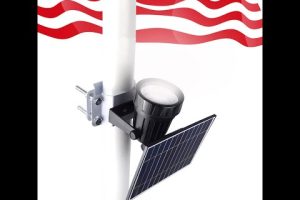
At their core, solar garden lights are self-contained lighting units that harness energy from the sun during the day and use it to illuminate your outdoor areas at night. Each fixture typically includes a photovoltaic panel, a rechargeable battery, an LED light source, and a light sensor. During daylight hours, the solar panel converts sunlight into electrical energy, which is stored in the internal battery. As darkness falls, the built-in photoresistor or light sensor automatically triggers the LED to turn on, providing hours of illumination without any wiring or electricity bills.
The quality of a solar garden light depends heavily on several factors, including the efficiency of the solar panel, the capacity of the rechargeable battery, the type and brightness of the LED chip, and the design of the light housing. Modern LED technology has dramatically improved the luminosity and energy efficiency of these fixtures, making them competitive with — and in many cases superior to — conventional outdoor lighting options.
Key Components of Solar Garden Lighting Systems
Understanding the individual components of solar garden lights helps you make informed purchasing decisions:
- Photovoltaic (PV) Panel: Converts sunlight into electricity. Monocrystalline panels are the most efficient but also the most expensive, while polycrystalline panels offer a good balance of cost and performance.
- Rechargeable Battery: Most solar garden lights use either nickel-metal hydride (NiMH) or lithium-ion batteries. Lithium-ion batteries generally offer longer lifespans and better performance in cloudy conditions.
- LED Chip: The light source. High-quality LEDs consume minimal power while delivering bright, consistent illumination for thousands of hours.
- Light Sensor: An automatic photocell or dusk-to-dawn sensor that turns the light on at sunset and off at sunrise.
- Housing and Mounting: Weather-resistant enclosures designed to withstand rain, snow, UV exposure, and temperature fluctuations.
Types of Solar Garden Lights for Every Outdoor Need
Not all solar garden lights are created equal. Different styles and configurations serve distinct purposes, so choosing the right type depends on what you want to achieve in your outdoor space.

1. Solar Pathway Lights
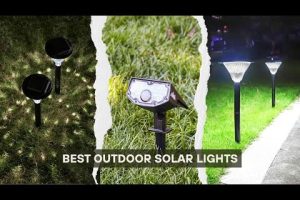
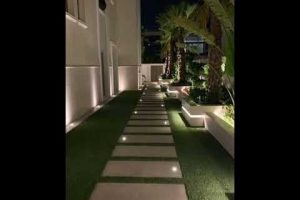
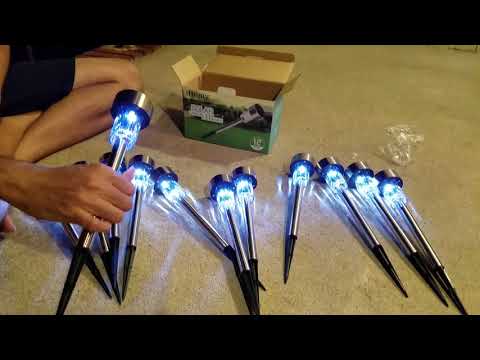
These are the most popular category of solar landscape lighting. Installed along walkways, driveways, and garden borders, pathway lights provide subtle, directional illumination that enhances safety and guides foot traffic. They typically feature low-profile designs with downward-facing LED bulbs, often housed in frosted or tinted glass for a refined look.
2. Solar Spotlights and Floodlights
For highlighting architectural features, trees, or garden focal points, solar spotlights deliver focused, intense beams of light. Floodlights offer a wider spread and are ideal for illuminating larger areas such as patios, decks, or exterior walls. These fixtures usually come with adjustable heads and multiple lighting modes, including motion sensor options for added security.
3. Solar String Lights
Increasingly popular for creating a cozy, festive atmosphere, solar string lights are perfect for wrapping around pergolas, fencing, trees, or patio umbrellas. They typically use warm LED bulbs and can run for 8 to 12 hours on a single charge during summer months.
4. Solar Lanterns and Stake Lights
Decorative solar lanterns and stake lights add charm and character to flower beds, herb gardens, and entryways. They come in a wide variety of designs, from classic cottage styles to modern minimalist aesthetics, and often include color-changing or flickering modes for visual interest.
Benefits of Installing Solar Garden Lights
Switching to outdoor solar lighting offers a compelling combination of financial, practical, and environmental advantages:
- Zero Electricity Costs: Solar garden lights operate entirely on renewable solar energy, eliminating the need for wiring or monthly electricity charges.
- Easy Installation: Most solar fixtures are stake-mounted or free-standing, requiring no electrical skills, tools, or professional installation.
- Low Maintenance: With no wiring to manage and long-lasting LED bulbs, solar garden lights demand minimal upkeep beyond occasional panel cleaning and battery replacement.
- Eco-Friendly: By reducing reliance on grid electricity, solar lighting lowers your carbon footprint and supports sustainable living practices.
- Enhanced Security: Well-placed solar lights deter intruders by eliminating dark zones around your property, and motion-sensor models add an extra layer of protection.
- Versatile Design Options: Today’s solar garden lights come in an enormous range of styles, sizes, and brightness levels, making it easy to match any landscape design or personal preference.
How to Choose the Best Solar Garden Lights
With hundreds of products on the market, selecting the right solar garden lights can feel overwhelming. Here are the key specifications and features to evaluate before you buy.
| Feature | What to Look For | Why It Matters |
| Solar Panel Type | Monocrystalline silicon | Highest conversion efficiency (15-22%), performs better in low-light conditions |
| Battery Capacity | 1000-2000 mAh minimum for pathway lights; 2000+ mAh for spotlights | Larger capacity means longer runtime and brighter illumination per charge |
| LED Brightness | Lumens rating; 50-100 lm for pathway, 200+ lm for spotlights | Higher lumens mean more light output; balance brightness with desired ambiance |
| IP Rating | IP65 or higher | Ensures waterproof and dustproof performance for year-round outdoor use |
| Runtime | 8-12 hours on full charge | Longer runtime means fewer dark nights and less frequent recharging |
| Mounting Style | Stake, wall, or ground flush | Choose based on where you plan to install the light in your garden |
| Lighting Modes | Multiple modes (bright, dim, sensor, color-changing) | Versatility allows you to customize the atmosphere for different occasions |
Expert Tip: Always check customer reviews and independent test results. Many manufacturers overstate lumens and battery capacity in their marketing materials. Trusted review sites and real-world user feedback provide a more accurate picture of a product’s actual performance.
Placement and Positioning Strategies
Even the best solar garden lights will underperform if they are not positioned correctly. Follow these guidelines to maximize solar charging and light output:
- Place solar panels where they will receive at least 6 to 8 hours of direct sunlight per day, preferably facing south in the Northern Hemisphere.
- Avoid shaded areas caused by trees, fences, or building overhangs, as even partial shading can significantly reduce charging efficiency.
- Install pathway lights approximately 6 to 8 feet apart for consistent, even illumination along walkways.
- Position spotlights 2 to 3 feet away from the feature you want to highlight, angling the beam downward at a 45-degree angle for the most dramatic effect.
- During the first few weeks after installation, allow the batteries to fully charge and discharge several times to condition them for optimal performance.
Common Challenges and How to Overcome Them
While solar garden lights are remarkably convenient, they do come with a few inherent limitations that users should understand.
Reduced Performance in Winter and Cloudy Weather
Shorter daylight hours and overcast skies during winter months can reduce charging time and overall brightness. To mitigate this, consider installing solar lights with larger solar panels and higher-capacity lithium-ion batteries, which store energy more efficiently even under suboptimal conditions.
Intermittent or Dim Lighting
If your solar garden lights are flickering or dimming earlier than expected, the most common causes are dirty solar panels, degraded batteries, or insufficient sun exposure. Clean the panels regularly with a damp cloth, replace batteries every 1 to 2 years, and reposition fixtures to sunnier locations if necessary.
Seasonal Adjustments

During summer, when days are long and sunny, solar lights charge quickly and run bright all night. In autumn and winter, you may need to manually turn off lights during the day to conserve battery for the shorter nights ahead. Some premium models include intelligent light control systems that automatically adjust brightness based on battery level and ambient conditions.
Maintenance Tips for Long-Lasting Solar Garden Lights
To keep your solar-powered outdoor lighting performing at its best season after season, follow these simple maintenance practices:
- Clean solar panels monthly with a soft, damp cloth to remove dust, pollen, bird droppings, and other debris that can block sunlight absorption.
- Check batteries annually and replace them when runtime noticeably decreases. Use manufacturer-recommended replacement batteries for best results.
- Inspect seals and gaskets regularly, especially after heavy storms, to ensure the waterproof rating remains intact.
- Trim overhanging branches that may cast shadows on solar panels during the day.
- Store lights indoors during extended periods of inactivity or harsh winter weather to prolong their lifespan.
Solar Garden Lights vs. Traditional Outdoor Lighting
Still debating whether solar garden lights are right for your property? Here is a quick comparison:
| Criteria | Solar Garden Lights | Traditional Wired Lights |
| Installation Complexity | Simple — no wiring needed | Requires electrical wiring and possibly a licensed electrician |
| Operating Cost | Zero electricity cost | Ongoing electricity bill |
| Installation Cost | Low — plug-and-play | Moderate to high — includes wiring, transformers, and labor |
| Flexibility | Easily repositioned anywhere | Fixed in place by wiring layout |
| Performance in All Conditions | Dependent on sunlight availability | Consistent regardless of weather |
| Environmental Impact | Renewable energy; zero emissions | Draws from grid, which may rely on fossil fuels |
| Maintenance | Minimal — battery replacement every 1-2 years | Wiring issues, bulb replacements, transformer maintenance |
For most residential gardens, solar garden lights offer the best balance of convenience, cost savings, and environmental responsibility. Traditional wired lighting remains a better choice only for situations where consistent, high-intensity illumination is required regardless of weather conditions.
Final Thoughts
Garden lights solar technology has evolved remarkably over the past decade, and today’s best models deliver impressive brightness, long runtimes, and attractive designs that rival any wired alternative. By understanding the technology, choosing the right type of fixture for each area of your garden, and following proper placement and maintenance practices, you can transform your outdoor space into a beautifully lit retreat that operates entirely on clean, renewable energy. Start with a few key fixtures in high-traffic areas and expand your system over time as you discover what works best for your landscape.
Frequently Asked Questions
How long do solar garden lights last on a single charge?
Most quality solar garden lights provide 8 to 12 hours of illumination on a full charge during summer months. Runtime decreases during cloudy days and in winter when sunlight is scarce. Models with larger batteries and efficient LED chips tend to perform better in low-light conditions.
Can solar garden lights charge on cloudy days?
Yes, solar panels can still generate electricity from diffuse sunlight on cloudy days, though at a reduced rate — typically 10 to 25% of their full capacity. High-quality solar garden lights with monocrystalline panels and lithium-ion batteries are better equipped to capture and store what limited energy is available on overcast days.
Do solar garden lights need direct sunlight to work?
Direct sunlight is ideal and produces the fastest, most complete charge. However, solar garden lights can still function with indirect or partial sunlight, though charging times will be longer and runtime may be shorter. Positioning panels in the sunniest available spot is the single most important factor for maximizing performance.
How often do the batteries in solar garden lights need to be replaced?
Rechargeable batteries in solar garden lights typically last 1 to 3 years depending on quality, climate, and usage patterns. Signs that battery replacement is needed include noticeably shorter runtimes, dimmer light output, or lights that fail to turn on at all. Many models use standard replaceable batteries, making this an easy DIY task.
Are solar garden lights waterproof enough to survive the winter?
Most solar garden lights rated IP65 or higher are designed to withstand rain, snow, and freezing temperatures. However, extreme cold can reduce battery efficiency temporarily. For the longest lifespan, consider removing lights during harsh winters or storing them indoors when not in use for extended periods.
What is the best color temperature for solar garden lights?
Warm white (2700K-3000K) is the most popular choice for garden lighting because it creates a soft, inviting ambiance similar to traditional incandescent bulbs. Cool white (4000K-5000K) provides brighter, more task-oriented illumination suitable for security lighting and pathways. Many solar garden lights now offer adjustable color temperature or multiple modes to suit different moods and functions.