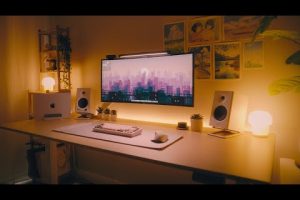



When you think about upgrading your workspace, a cool desk lamp is one of the smallest investments that delivers the biggest impact. It is not just a lighting tool — it is a statement piece that shapes your mood, boosts your focus, and ties the entire aesthetic of your desk together. Whether you are a remote worker chasing productivity, a college student pulling all-nighters, or a creative professional who demands precision lighting, the right desk lamp transforms your environment entirely. In this deep dive, we will explore what makes a desk lamp genuinely “cool,” the best types available, key features to prioritize, expert recommendations, and everything else you need to know before making a purchase.
What Makes a Desk Lamp “Cool”?
The word “cool” means different things to different people when it comes to desk lighting. For some, it is about sleek, modern aesthetics that turn heads. For others, it is about cutting-edge smart features and customizable lighting modes. A truly cool desk lamp sits at the intersection of form and function — it looks stunning on your desk and performs exceptionally well when the lights go down for a long work session.

Design and Aesthetics
Industrial brass finishes, matte black aluminum arms, retro Edison-bulb vibes, and futuristic geometric shapes — the design landscape for desk lamps has exploded in recent years. The coolest desk lamps today blur the line between functional lighting and interior décor. Think of brands like BenQ, TaoTronics, and BenQ, which have pushed the envelope on minimalist yet striking silhouettes. A lamp that makes you excited to sit down at your desk every morning is doing its job.
Lighting Technology
Beyond looks, the lighting technology inside a desk lamp matters enormously. LED technology has become the gold standard, offering superior color rendering, lower heat output, and dramatically longer lifespans compared to traditional incandescent or fluorescent bulbs. Premium models now feature full-spectrum LEDs that closely mimic natural daylight, reducing eye strain during marathon work sessions. Some advanced desk lamps even incorporate circadian rhythm lighting, gradually shifting color temperature throughout the day to align with your body’s natural sleep-wake cycle.
Best Types of Cool Desk Lamps for Different Needs
Not all desk lamps serve the same purpose. Understanding the different categories helps you zero in on the perfect match for your setup.
LED Desk Lamps
LED desk lamps are the undisputed workhorses of modern workspace lighting. They are energy-efficient, dimmable, and available in a wide range of color temperatures from warm amber (around 2700K) to crisp daylight (5000K and above). If you spend hours reading documents, coding, or designing, an LED lamp with adjustable brightness and a high Color Rendering Index (CRI) is non-negotiable. These lamps also run cool to the touch, which is a significant advantage over halogen alternatives.
RGB and Smart Desk Lamps
For those who want personality in their workspace, RGB desk lamps offer a playground of color options. You can shift between deep blues, vibrant purples, soft whites, or any hue in between. Smart desk lamps go a step further by integrating with voice assistants like Alexa, Google Assistant, and Siri. You can control brightness, color, and even set schedules through your phone. These are ideal for gamers, streamers, and anyone who treats their desk as a personal command center.
Minimalist and Vintage-Style Desk Lamps
Not everyone wants a high-tech smart lamp, and that is perfectly fine. Minimalist desk lamps with clean lines and neutral tones suit Scandinavian-inspired workspaces beautifully. On the other end of the spectrum, vintage-style desk lamps with brass accents, warm filament bulbs, and classic banker lamp silhouettes bring a timeless, sophisticated charm to traditional or rustic desk setups. These styles prove that a cool desk lamp does not always need smart features — sometimes, elegant simplicity is the ultimate flex.
Key Features to Look For in a Cool Desk Lamp
Buying a desk lamp should never be a random decision. Here are the critical features that separate a mediocre lamp from a genuinely great one.
- Adjustable Brightness Levels: Look for lamps offering a wide dimming range, typically from 10% to 100%. This lets you transition seamlessly from focused task lighting to soft ambient glow.
- Color Temperature Range: The best desk lamps offer a range between 3000K and 6500K, covering warm light for relaxation and cool daylight for demanding cognitive work.
- Arm Flexibility and Head Tilt: A gooseneck or articulated arm that bends and rotates freely ensures you can direct light exactly where you need it — whether that is a keyboard, a blueprint, or a sketchpad.
- Eye-Care Technology: Lamps with flicker-free drivers and anti-glare designs significantly reduce digital eye strain, which is critical for anyone staring at screens for eight or more hours a day.
- USB Charging Ports: Many modern desk lamps now include built-in USB-A or USB-C ports, doubling as a charging station for your phone or tablet. This is a small feature that adds tremendous convenience.
- Build Quality and Material: Aluminum alloy, steel, and high-grade ABS plastic all hold up differently over time. A sturdy base prevents tipping, and a smooth joint mechanism keeps the arm from sagging.
Brightness and Color Temperature
Understanding lumens and Kelvin scales helps you make an informed choice. For detailed desk work such as reading, writing, or design work, aim for 400 to 800 lumens with a color temperature around 4000K to 5000K. This range provides crisp, neutral light that closely resembles natural daylight without being harsh. For casual browsing or ambient mood lighting, lower brightness and warmer tones around 2700K to 3000K create a cozy atmosphere.
Adjustability and Flexibility
A desk lamp that cannot move is a desk lamp that cannot grow with your needs. The most versatile models offer multiple pivot points — at the base, the neck, and the head. Some premium lamps even include a rotating base that lets you swing the light arm across the entire desk surface. This flexibility is especially valuable in shared or compact workspaces where the lamp needs to adapt to different tasks throughout the day.

Power Source and Energy Efficiency
Most modern cool desk lamps run on standard AC power, but a growing number of rechargeable and battery-operated models exist for those who value portability. USB-powered lamps are also gaining traction, allowing you to plug directly into a laptop or a USB hub. LED technology keeps energy consumption remarkably low — typically between 5 and 15 watts — which means negligible impact on your electricity bill even during long hours of daily use.
Comparison Table: Top Cool Desk Lamps
| Lamp Model | Type | Brightness Range | Key Feature | Price Range |
| BenQ ScreenBar Halo | LED Monitor Light Bar | Adjustable, flicker-free | Mounts on monitor, eliminates screen glare | Premium ($130-$180) |
| TaoTronics TT-DL16 | LED Arm Desk Lamp | 5 levels, 5 color temps | USB charging port, 5 color modes | Mid-range ($35-$50) |
| BenQ e-Reading LED Desk Lamp | LED Eye-Care Lamp | High, flicker-free | Circadian light technology, Auto-Dimming | Premium ($150-$200) |
| Xiaomi Mi LED Desk Lamp | Smart LED Lamp | Adjustable, 1800K-6500K | Mi Home app control, voice assistant compatible | Budget-friendly ($25-$40) |
| BenQ Litian Desk Lamp | Retro-Modern LED | Dimmable, warm-to-cool | Classic design, sturdy metal build | Mid-range ($40-$60) |
This comparison highlights the diversity in the market, from premium monitor-mounted light bars designed for office professionals to affordable smart lamps perfect for dorm rooms or starter home offices. Each lamp serves a distinct purpose, so matching the model to your specific workflow is essential.
Expert Tips for Choosing the Right Cool Desk Lamp
Before you click “Add to Cart,” keep these expert-backed strategies in mind:
- Match the lamp to your desk size. A massive arc lamp on a tiny student desk looks awkward and takes up valuable workspace. Conversely, a tiny clip lamp on a large executive desk will leave half the surface in shadow.
- Prioritize CRI above 90. A high Color Rendering Index means colors appear true to life under the lamp, which matters for designers, photographers, and anyone working with visual materials.
- Test for flicker. Cheap LEDs can flicker at imperceptible frequencies that cause headaches and fatigue over time. Look for lamps explicitly labeled “flicker-free” or “DC dimming.”
- Consider your desk setup. If you use a dual-monitor configuration, a monitor light bar like the BenQ ScreenBar might outperform a traditional desk lamp by keeping your screen free of glare.
- Read reviews for longevity. A lamp that looks great on day one but develops a wobbly arm or dimming LED by month six is not a cool desk lamp — it is a disappointment.
Conclusion

A cool desk lamp is far more than an accessory — it is a productivity tool, a comfort enhancer, and a reflection of your personal style. Whether you gravitate toward a smart RGB lamp that responds to voice commands, a sleek LED arm lamp for serious work, or a vintage-inspired piece that elevates your desk’s aesthetic, the right choice transforms how you experience your workspace every single day. Invest in quality lighting, prioritize eye-care features, and choose a design that makes you proud to sit down and get to work. Your eyes, your focus, and your desk will thank you.
Frequently Asked Questions
What is the best color temperature for a cool desk lamp for work?
For most desk work, a color temperature between 4000K and 5000K is ideal. This range provides a neutral, natural white light that promotes alertness and reduces eye strain without the harshness of cooler temperatures above 6000K or the sleepiness associated with warm tones below 3000K.
Are LED desk lamps really better than halogen desk lamps?
Yes, LED desk lamps are superior in nearly every practical category. They consume significantly less energy, last thousands of hours longer, produce minimal heat, and offer instant full brightness without warm-up time. Halogen lamps, while offering excellent color rendering, run hot and are far less efficient, making them less practical for daily desk use.
Can a cool desk lamp help reduce eye strain during long work sessions?
Absolutely. Desk lamps with flicker-free LED drivers, adjustable brightness, and high CRI ratings are specifically designed to minimize eye fatigue. Look for models that offer uniform light distribution without harsh shadows or glare on your screen, as uneven lighting is one of the leading causes of workplace eye discomfort.
Is a monitor light bar or a traditional desk lamp better for productivity?
It depends on your setup. A monitor light bar, such as the BenQ ScreenBar, is excellent for dual-monitor users or anyone who wants to keep the desk surface clutter-free. It illuminates the screen and documents without creating screen glare. A traditional desk lamp offers more flexibility in positioning and can light up a larger desk area, making it better for those who work across the entire surface.
How much should I spend on a quality cool desk lamp?
You can find excellent LED desk lamps in the $30 to $60 range that cover most needs effectively. Premium models with advanced features like circadian lighting, auto-dimming sensors, and smart connectivity typically range from $100 to $200. The key is to prioritize features that align with your specific usage rather than chasing the highest price tag.
Do smart desk lamps work without Wi-Fi?
Many smart desk lamps include a physical remote or touch controls that work independently of a Wi-Fi connection. However, features like voice control, app-based scheduling, and color customization typically require a stable internet connection. If Wi-Fi is unreliable in your workspace, choose a lamp with robust offline controls to ensure full functionality.