If you have ever wondered why some indoor gardens thrive while others struggle, the answer often comes down to one critical factor: the light your plants receive. Full spectrum light for plants has become the gold standard for indoor gardening enthusiasts, commercial growers, and even scientists studying photobiology. Unlike traditional lighting that emits only a narrow band of wavelengths, full spectrum grow lights replicate the natural sunlight that plants have evolved to depend on over millions of years. Whether you are nurturing a small collection of succulents on a windowsill or managing a full-scale vertical farm, understanding full spectrum lighting can transform the way you grow.
What Is Full Spectrum Light for Plants?

Full spectrum light refers to an artificial light source that emits wavelengths across the entire visible light range, closely mimicking the natural solar radiation plants experience outdoors. This spectrum typically spans from ultraviolet (UV) through visible light — including reds, blues, greens, and yellows — all the way into the far-red and infrared ranges. The term “full spectrum” has become a staple in horticultural lighting discussions because it signals a bulb or fixture designed to serve as a complete light recipe for photosynthesis, photomorphogenesis, and overall plant health.

Understanding the Light Spectrum and Plant Responses
The electromagnetic spectrum relevant to plants can be broken down into several key regions. Photosynthetically Active Radiation, commonly known as PAR, covers wavelengths between approximately 400 and 700 nanometers. Within this range, chlorophyll a and chlorophyll b absorb light most efficiently in the blue band (around 430–450 nm) and the red band (around 640–680 nm). However, other pigments such as carotenoids and phycobilins also play roles in capturing light energy and transferring it to the photosynthetic apparatus. What makes full spectrum lighting superior is that it delivers all of these wavelengths simultaneously, just as the sun does, rather than focusing narrowly on one or two peaks.
Why Full Spectrum Light Matters for Plant Growth
Plants are not simply photosynthetic machines that convert light into energy. They use light signals to regulate an extraordinary range of developmental processes. This phenomenon, known as photomorphogenesis, influences everything from stem elongation and leaf expansion to flowering time and pigment production. When you provide your plants with a balanced full spectrum, you are not just fueling photosynthesis — you are giving them a complete environmental signal that tells them how to grow, when to flower, and how to defend themselves against stress.
Here is a closer look at why each part of the spectrum plays a vital role:
- Blue light (400–500 nm): Promotes vegetative growth, chlorophyll production, and compact, bushy plant structure. It suppresses stem elongation and encourages thick, healthy leaves.
- Green light (500–600 nm): Penetrates deeper into leaf tissue and canopy layers than blue or red alone, supporting photosynthesis in lower leaves that would otherwise be shaded.
- Red light (600–700 nm): Drives flowering, fruiting, and chlorophyll synthesis. It works synergistically with blue light to balance vegetative and reproductive growth.
- Far-red light (700–750 nm): Influences the shade avoidance response, stem stretching, and flowering in many species. It also plays a role in the Emerson enhancement effect, where combining red and far-red light boosts photosynthetic efficiency beyond what either wavelength achieves alone.
- UV light (100–400 nm): Stimulates the production of protective compounds like anthocyanins, flavonoids, and essential oils, which enhance flavor, aroma, and resilience.
When you understand these roles, it becomes clear why a full spectrum grow light is not a luxury but a necessity for serious indoor cultivation. Plants grown under narrow-spectrum lights — such as those emitting only red and blue — often develop abnormally, show reduced secondary metabolite production, and may exhibit signs of stress even when given adequate photon flux density.
Types of Full Spectrum Grow Lights
The indoor growing market offers several categories of full spectrum lighting, each with distinct advantages and trade-offs. Choosing the right type depends on your growing space, budget, plant species, and level of experience.
LED Full Spectrum Grow Lights
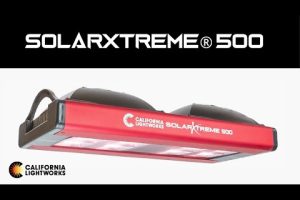
Modern LED grow lights represent the cutting edge of horticultural illumination. They use specially engineered diodes — often combining quantum board arrays, COB (Chip-on-Board) LEDs, and supplemental UV and IR LEDs — to produce a smooth, continuous spectrum. Leading manufacturers design their LEDs with specific spectral curves that match the absorption profiles of chlorophyll and other photosynthetic pigments. LEDs are exceptionally energy efficient, often delivering over 2.5 micromoles per joule (μmol/J), and they run cool, which reduces the need for extensive ventilation. Their long lifespan, typically rated at 50,000 hours or more, makes them a cost-effective investment over time.
Fluorescent Full Spectrum Lights
T5 fluorescent tubes and compact fluorescent lamps (CFLs) have been a staple of indoor growing for decades. They offer a naturally broad spectrum that works well for seedlings, clones, and low-light plants such as herbs and leafy greens. Fluorescents are affordable and widely available, but they are less energy efficient than LEDs and produce more heat per watt of light output. They are best suited for small-scale setups or growers who are just starting out.
High-Intensity Discharge (HID) Lights
Metal halide (MH) and high-pressure sodium (HPS) lamps have powered commercial grow operations for years. When combined with spectral conversion bulbs or reflective coatings, they can produce a reasonably full spectrum. However, HID fixtures consume significant electricity, generate substantial heat, and require ballasts and reflectors. They remain popular in large-scale applications where their raw light intensity compensates for their inefficiency.
Comparison of Full Spectrum Light Types
| Feature | LED | Fluorescent | HID |
| Energy Efficiency | High (2.5+ μmol/J) | Moderate | Low to Moderate |
| Heat Output | Low | Moderate | High |
| Lifespan | 50,000+ hours | 10,000–20,000 hours | 10,000–24,000 hours |
| Upfront Cost | Moderate to High | Low | Moderate |
| Best For | All growth stages, all scales | Seedlings, clones, small spaces | Large-scale, flowering stages |
| Spectrum Tunability | Highly customizable | Fixed broad spectrum | Limited without modifiers |
How to Choose the Right Full Spectrum Light for Your Setup
Selecting the ideal full spectrum grow light requires balancing several technical and practical considerations. A light that is perfect for a tropical houseplant in a bedroom will not necessarily work for a commercial cannabis operation or a greenhouse supplemental lighting rig.
Start by evaluating the light intensity your plants need. This is measured in photosynthetic photon flux density (PPFD), expressed in micromoles per square meter per second (μmol/m²/s). Different species and growth stages require different PPFD levels. Leafy greens and herbs typically thrive at 100–200 μmol/m²/s, while fruiting plants like tomatoes, peppers, and cannabis may need 400–800 μmol/m²/s or more during peak flowering.
Next, consider the coverage area of the fixture. Most quality LED grow lights list their recommended coverage footprint at a specific hanging height. Match this to the size of your growing space, and remember that you can often adjust the dimmer or use multiple smaller fixtures to fine-tune coverage.
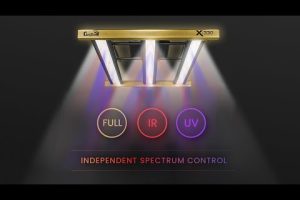
Spectrum adjustability is another important feature. Some advanced LED fixtures allow you to shift the ratio of blue to red light or add UV and IR channels independently. This is especially useful during the vegetative and flowering stages, where plants benefit from different spectral profiles. If your fixture does not offer this flexibility, look for a unit with a balanced, continuous spectrum that works across all growth phases without needing to swap bulbs.
Finally, assess the build quality and thermal management. A well-designed heat sink, quiet fan, and durable housing will ensure your grow light operates reliably for years. Look for fixtures with UL or ETL safety certifications, and read user reviews that discuss long-term performance and durability.
Best Practices for Using Full Spectrum Grow Lights
Even the best full spectrum light will not deliver optimal results if it is used incorrectly. Here are expert tips to help you get the most from your investment:
- Hang lights at the correct distance. Too close, and you risk light burn and heat stress. Too far, and your plants become etiolated and leggy. As a general starting point, hang LED full spectrum fixtures 18–24 inches above the canopy and adjust based on how your plants respond.
- Use a timer for consistent photoperiods. Most plants thrive on a 16/8 light/dark cycle during vegetative growth and a 12/12 cycle to trigger flowering. Consistent timing mimics natural seasonal cues and prevents stress.
- Monitor PPFD and DLI. A quantum sensor or PAR meter can help you verify that your plants are receiving adequate light at every point in the canopy. Daily light integral (DLI) measures the total photosynthetic light delivered per day and is a powerful tool for optimizing schedules.
- Supplement with ambient reflectivity. Mylar or white reflective walls bounce light back onto the lower canopy, increasing the efficiency of your full spectrum setup without increasing energy consumption.
- Rotate plants regularly. Even with excellent coverage, plants closer to the light will grow faster. Rotating pots ensures even development across the entire collection.
Common Mistakes When Using Full Spectrum Lighting
Many indoor gardeners make avoidable errors that limit their results. One of the most common is assuming that a higher wattage always means better growth. In reality, what matters is the photosynthetic photon flux (PPF) the fixture delivers and how efficiently that light reaches the plant canopy. Another mistake is ignoring the light spectrum at different growth stages — using a single fixed setting from seedling to harvest can lead to subpar flowering or stretched, weak vegetation.
Some growers also underestimate the importance of darkness. Plants require uninterrupted dark periods to carry out critical metabolic processes, including the Calvin cycle and the conversion of stored starches into usable sugars. Providing even brief light leaks during the dark cycle can disrupt flowering in photoperiod-sensitive species and cause long-term health issues.

Conclusion
Full spectrum light for plants is far more than a trendy buzzword — it is a fundamental pillar of successful indoor gardening. By understanding how different wavelengths influence photosynthesis, morphology, and flowering, you can make informed decisions about your lighting setup that lead to healthier, more productive plants. Whether you choose a cutting-edge LED fixture, a reliable fluorescent system, or a hybrid approach, the key is to match your light source to the specific needs of your plants and your growing environment. With the right full spectrum light and a little knowledge, you can create an indoor garden that rivals anything you might find in a professional greenhouse.
FAQs
What does full spectrum light mean for plants?
Full spectrum light for plants refers to a light source that emits wavelengths across the entire visible and near-visible range, typically from about 380 nanometers to 780 nanometers. This closely replicates natural sunlight and provides the complete range of photons that plants need for photosynthesis, photomorphogenesis, and healthy development throughout all growth stages.
Can full spectrum LED grow lights replace sunlight entirely?
High-quality full spectrum LED grow lights can effectively replace sunlight for most indoor plants, provided they deliver sufficient intensity (PPFD) and coverage area. Many commercial growers and researchers run entirely light-dependent cultivation without any natural sunlight, but the fixture must be properly matched to the plant species and growth stage.
How many hours of full spectrum light do plants need per day?
Most plants require 12 to 16 hours of light per day during the vegetative phase and 10 to 12 hours during flowering. The exact duration depends on the species, variety, and whether the plant is photoperiod-sensitive. Using a reliable timer ensures consistent photoperiods that promote vigorous, predictable growth.
Are full spectrum grow lights better than red and blue only lights?
Yes, full spectrum grow lights are generally superior to narrow red-blue lights for most applications. While red and blue LEDs can sustain basic photosynthesis, plants grown under full spectrum lighting exhibit better leaf development, stronger stems, higher essential oil production, and more natural coloration. The additional wavelengths — including green, far-red, and UV — trigger important photomorphogenic responses that narrow-spectrum lights cannot replicate.
How do I know if my full spectrum light is powerful enough for my plants?
The best way to determine whether your light is adequate is to measure the PPFD at canopy level using a quantum sensor. Compare the readings against the recommended levels for your specific plant species. As a general rule, seedlings and low-light plants need around 50–100 μmol/m²/s, while high-light fruiting plants require 400–800 μmol/m²/s during peak production.