


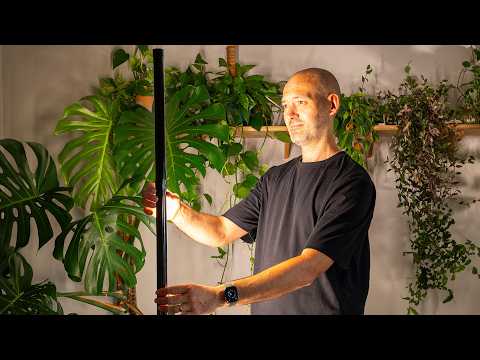
Choosing the best indoor grow lights for your garden isn’t just about picking the brightest panel on the shelf. It’s about matching the right light spectrum, intensity, and coverage to the plants you’re growing and the space you have available. Whether you’re starting your first seedling on a kitchen windowsill or building a full-scale indoor hydroponic operation, the right grow light can mean the difference between a struggling crop and a thriving harvest. In this guide, we’ll break down every major type of grow light, compare the top options on the market, and give you actionable recommendations whether you’re a complete beginner or a seasoned indoor gardener looking to upgrade your setup.
Understanding the Main Types of Indoor Grow Lights
Before diving into specific product recommendations, it helps to understand the technology behind each category of grow light. Not all lighting solutions are created equal, and each has distinct advantages and limitations that affect plant growth, energy costs, and long-term investment.
LED Grow Lights
Light Emitting Diode grow lights have become the undisputed industry standard for indoor gardening. Modern LED panels deliver full-spectrum light that mimics natural sunlight, covering both the blue wavelengths needed for vegetative growth and the red wavelengths essential for flowering and fruiting. The best LED grow lights are energy-efficient, produce minimal heat, and can last 50,000 hours or more. If you want a reliable, low-maintenance option that works across the entire plant lifecycle, LEDs are almost certainly your best bet.
HPS and Metal Halide Grow Lights
High-Pressure Sodium (HPS) and Metal Halide (MH) systems have been the backbone of commercial indoor growing for decades. HPS lights emit warm-spectrum light that’s ideal during the flowering stage, while Metal Halide bulbs produce cooler blue light perfect for vegetative growth. However, these systems run hot, consume significant electricity, and require separate ballasts and bulb changes as your plants progress through different growth phases. They remain popular among commercial growers who need high-intensity output for large-scale operations.
Fluorescent Grow Lights
Fluorescent lighting, particularly T5 and T5 HO (High Output) tubes, is a go-to choice for beginners and small-scale growers. These lights are affordable, cool-running, and excellent for propagating seedlings and growing leafy greens. The downside is that fluorescent fixtures don’t provide enough intensity for heavy flowering plants like tomatoes, peppers, or cannabis. If you’re growing herbs and microgreens on a budget, fluorescent lights are a solid starting point.
COB and Quantum Board LED Lights
Chip-on-Board (COB) and quantum board LED designs represent the cutting edge of grow light engineering. COB LEDs pack multiple small diodes into a single concentrated light source for intense, even coverage, while quantum board designs spread diodes across a larger area for uniform light distribution. These advanced configurations offer superior penetration through the plant canopy and are ideal for intermediate to advanced growers managing larger tent setups or grow rooms.
What to Look for When Buying Indoor Grow Lights

Not sure what specs actually matter? Here are the key factors that separate good grow lights from great ones.
- Light Spectrum: Full-spectrum lights covering 380nm to 780nm support all growth stages. Some growers prefer adjustable spectrum controls to switch between veg and bloom modes.
- Wattage and PPFD: Photosynthetic Photon Flux Density measures how much usable light reaches your plants. Look for PPFD maps provided by manufacturers to ensure even coverage across your growing area.
- Coverage Area: Match the light’s footprint to your grow space. A light designed for a 2×2 foot tent won’t adequately cover a 4×4 space.
- Heat Management: Excessive heat stresses plants and can cause burns on leaves and buds. LED lights generally run cooler, but you still need adequate ventilation in enclosed grow spaces.
- Build Quality and Warranty: Premium fixtures from reputable brands typically include warranties of 3 to 5 years, which signals confidence in durability and performance.
- Daisy Chain and Dimming: Advanced features like daisy chain connectivity and dimmable controls let you manage multiple lights from a single controller and fine-tune light intensity for different growth stages.
Best Indoor Grow Lights by Skill Level
Best for Beginners
If you’re new to indoor gardening, simplicity and affordability are your priorities. The VIPARSPECTRA V300 is one of the most recommended entry-level LED grow lights. It delivers a full-spectrum blend with 300 watts of power, covers up to a 2×2 foot area during the vegetative stage, and includes a dimmer knob for easy adjustment. Another excellent beginner choice is the Roleadro GalaxyHydro 300W, which offers comparable performance at a similar price point and has earned a loyal following among first-time growers.
Best for Intermediate Growers

Once you’ve outgrown small tent setups, you need lights with higher wattage, better penetration, and wider coverage. The Mars Hydro TS1000 is a standout in this category, delivering 150 watts of actual power draw with a quantum board design that provides uniform light distribution across a 3×3 foot grow area. The Barrina LED T5 Grow Light Panels are also excellent for intermediate growers managing multiple shelving units or vertical gardens, offering flexible, modular lighting that scales with your setup.
Best for Advanced Growers
Serious cultivators need commercial-grade performance. The Spider Farmer SF1000 uses Samsung LM301B diodes to deliver industry-leading efficiency and a highly uniform photon distribution across a 4×4 foot space. For maximum canopy penetration and light intensity, the Hortilux Blaster HPS 1000W remains a gold standard in flowering-stage lighting, particularly for growers cultivating high-light-demanding plants like premium cannabis strains or large fruiting vegetables.
Comparison Table: Top Indoor Grow Lights at a Glance
| Product | Type | Wattage | Coverage | Best For |
| VIPARSPECTRA V300 | LED | 300W | 2×2 ft (veg) / 1.5×1.5 ft (bloom) | Beginners |
| Roleadro GalaxyHydro 300W | LED | 300W | 2×2 ft | Beginners on a budget |
| Mars Hydro TS1000 | Quantum Board LED | 150W | 3×3 ft | Intermediate growers |
| Barrina T5 LED Panels | Fluorescent LED | Various | Modular (shelving) | Herbs & microgreens |
| Spider Farmer SF1000 | Samsung LED | 100W | 4×4 ft | Advanced growers |
| Hortilux Blaster 1000W | HPS | 1000W | 4×4 ft (bloom) | Commercial/heavy bloom |
Expert Tips for Maximizing Your Grow Light Performance
Simply buying the best indoor grow lights won’t automatically guarantee results. How you position, schedule, and manage your lighting setup makes a massive difference in plant health and yield.
- Hang lights at the correct height. LED panels should typically be positioned 18 to 24 inches above the plant canopy during the vegetative stage and 12 to 18 inches during flowering. HPS lights need more distance, usually 24 to 36 inches, due to heat output.
- Use a light timer. Most vegetables and flowering plants thrive on an 18/6 light cycle during veg and a 12/12 cycle to trigger flowering. Consistency matters more than total hours, so invest in a reliable digital timer.
- Rotate your plants regularly. Even with excellent light distribution, the center of your light footprint is always brighter than the edges. Rotating pots every few days ensures even growth and prevents stretching toward the light source.
- Clean your fixtures regularly. Dust accumulation on LED panels and reflectors can reduce light output by 10 to 15 percent. A quick wipe-down every couple of weeks keeps your lights performing at peak efficiency.
- Supplement with reflective walls. Mylar sheeting or white-painted walls bounce light back onto the plant canopy, effectively increasing your PPFD without adding extra energy costs.
How to Calculate Your Grow Light Needs

A common question among indoor growers is how much light their plants actually need. The general rule of thumb is that most flowering plants require approximately 30 to 50 watts of actual power draw per square foot of growing space. Leafy greens and herbs need less, around 15 to 25 watts per square foot, while high-light crops like tomatoes and cannabis demand 50 to 80 watts per square foot. Always look for the actual power consumption (not the equivalent or advertised wattage) on the product specifications to calculate your requirements accurately.
Conclusion
Selecting the best indoor grow lights comes down to understanding your specific growing environment, the plants you’re cultivating, and your budget. LED technology has evolved dramatically in recent years, making it the clear choice for the vast majority of indoor gardeners thanks to its energy efficiency, spectral precision, and long lifespan. Start with a quality full-spectrum LED panel that matches your grow space, follow the positioning and timing guidelines outlined above, and you’ll be well on your way to harvesting healthy, productive plants indoors. The investment in proper lighting pays for itself quickly through better yields, faster growth cycles, and year-round growing capability regardless of what’s happening outside.
Frequently Asked Questions
What is the best indoor grow light for a small apartment closet?
For a closet-sized grow space of roughly 2×2 to 3×3 feet, the Mars Hydro TS1000 or VIPARSPECTRA V300 are excellent choices. Both are compact, low-heat LED fixtures that deliver full-spectrum light suitable for the entire plant lifecycle. The TS1000 edges ahead if you need slightly wider coverage, while the V300 is a solid budget-friendly option for beginners.
How many hours per day should indoor grow lights be on?
Most plants need 12 to 18 hours of light per day. For the vegetative growth stage, an 18/6 cycle (18 hours on, 6 hours off) promotes healthy foliage development. During the flowering stage, switching to a 12/12 cycle triggers blooming in photoperiod-sensitive plants. Autoflowering varieties do well on an 18/6 schedule throughout their entire life cycle.
Can you use regular LED strip lights for growing plants indoors?
Standard LED strip lights and household LED bulbs are not designed for plant growth because they lack the specific red and blue wavelengths that drive photosynthesis most efficiently. While you can supplement natural sunlight with regular LEDs in a pinch, purpose-built grow lights provide the full-spectrum output and adequate PPFD levels that plants need to thrive from seed to harvest.
What is the difference between wattage and PAR/PPFD in grow lights?
Wattage measures the electrical power a light consumes, not the light output your plants actually receive. PAR (Photosynthetically Active Radiation) refers to the range of light wavelengths (400 to 700nm) that plants use for photosynthesis. PPFD measures the density of those photons hitting a specific area of the canopy. A high-wattage light with poor PPFD distribution is far less effective than a lower-wattage fixture with excellent photon delivery, which is why modern growers prioritize PPFD data over raw wattage when comparing grow lights.
Do grow lights increase electricity bills significantly?
The impact on your electricity bill depends on the light type, wattage, and daily run time. A 300W LED running 18 hours a day consumes roughly 1.6 kWh per day. At an average U.S. electricity rate of $0.13 per kWh, that works out to about $6 to $7 per month per light fixture. Compared to HPS systems, which can draw nearly double the actual wattage for equivalent light output, modern LED grow lights are significantly cheaper to operate over time.