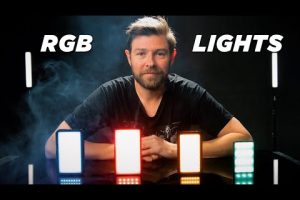



If you’ve been spending time in the photography world, you’ve probably noticed that LED lighting for photography has quietly become the go-to light source for shooters across every genre. From studio portraitists and product photographers to vloggers and cinematographers, continuous LED light panels offer a level of control and versatility that simply wasn’t possible with older lighting technologies. Unlike traditional flash units that fire a brief burst of light, LED lights let you see exactly what your subject will look like before you ever press the shutter. This real-time preview capability alone has made LED panels indispensable for modern photographers who demand precision and creative flexibility in their work.
Whether you’re a beginner building your first lighting kit or an experienced professional refining a sophisticated multi-light setup, understanding how to choose and use LED lights effectively can transform the quality of your images. This guide covers foundational concepts through advanced techniques, practical recommendations, and expert tips that go well beyond most beginner tutorials.
Why LED Lighting Has Become Essential for Photographers
The shift toward continuous LED light sources in photography didn’t happen by accident. As camera sensors have become more sensitive and LED technology has improved dramatically, the advantages of continuous lighting have become impossible to ignore. Photographers today want tools that streamline their workflow, reduce trial-and-error, and deliver consistent, professional-grade results every session.
Here are the core reasons LED lighting has earned its place as a staple in modern photography:
- Real-time visualization: You see the lighting setup exactly as the camera will capture it, making it easier to adjust shadows, highlights, and overall mood on the fly.
- Low heat output: Unlike tungsten lights that burn hot and can damage delicate subjects, LED panels stay cool even during extended shooting sessions.
- Energy efficiency: LEDs consume a fraction of the power that traditional lighting requires, making them portable and cost-effective over time.
- Flicker-free operation: High-quality LED panels produce stable, consistent light output that won’t create banding issues in video or burst photography.
- Adjustable color temperature: Most modern LED lights allow you to shift between warm and cool tones, often spanning from 2700K to 6500K or beyond.
- DMX and app control: Many professional-grade LED panels integrate with lighting control software, enabling synchronized multi-light setups.
These benefits make LED lighting particularly valuable for photographers who shoot video, run hybrid photo-video sessions, or need to work quickly in fast-paced environments like events and product shoots.

Understanding LED Lights for Photography: Key Concepts
Continuous LED vs. Flash Strobe: What’s the Real Difference?
The most fundamental decision any photographer faces when choosing lighting is between continuous LED lights and strobe flashes. LED lights provide constant illumination, which means you can observe lighting ratios, catch reflections in eyes, and fine-tune positioning in real time. Strobes, on the other hand, deliver intense bursts of light that freeze motion and overpower ambient light more aggressively. For most studio and portrait photographers, LED lights offer a more intuitive and forgiving workflow. However, if your primary focus is high-speed action photography or you need maximum light output in a single burst, strobes may still be the better choice for your situation.
CRI, TLCI, and Color Accuracy: Why Numbers Matter
When evaluating LED lights for photography, you’ll encounter two critical color accuracy metrics: CRI (Color Rendering Index) and TLCI (Television Lighting Consistency Index). CRI measures how accurately a light source reproduces colors compared to natural sunlight, with a perfect score of 100. TLCI is a more photography-specific metric that evaluates how well a light source renders colors on camera sensors. For professional-grade results, look for LED panels with a CRI of at least 95 and a TLCI rating above 90. Lower-quality LEDs may produce unnatural skin tones, muted colors, or unexpected color casts that require extensive correction in post-production.
Essential LED Specifications Every Photographer Should Know
- Brightness (lux/lumens): Determines how far the light reaches and how easily you can stop down your aperture for deeper depth of field.
- Dimming range: A wider dimming range — ideally from 0-100% — gives you more granular control over light intensity.
- Color temperature range: Bi-color and RGB panels offer the most flexibility for matching or creatively contrasting ambient light.
- Build quality and light dispersion: Look for panels with diffusion layers and barn doors to shape light precisely.
- Battery life and power options: For location shoots, battery-powered LED panels with long run times are invaluable.
Types of LED Lighting Equipment for Photography
The LED lighting market has expanded enormously in recent years, and the variety of available equipment can feel overwhelming. Here’s a breakdown of the most common types and what they’re best suited for:
LED Panels and Light Boards
LED panels are the workhorses of modern photography lighting. They come in various sizes — from compact 6×9-inch units perfect for on-camera fill to large 2×3-foot light boards that can illuminate an entire studio scene. Panels like the Godox SL60W and Aputure Amaran series offer excellent output and color accuracy at accessible price points, making them ideal starting points for photographers at any level.

LED Tubes and Strips
LED tubes — such as the Nanlite PavoTube or Quasar Science tubes — are cylindrical light sources that create beautiful, even wraparound light. They’re especially popular for portrait photography, fashion shoots, and creating stylized accent lighting. LED strips offer similar benefits in a flexible form factor that can be bent or mounted along edges for creative edge lighting effects.

LED Ring Lights
Ring lights produce a distinctive circular catchlight in the subject’s eyes, which has become a signature look in beauty, fashion, and portrait photography. They’re compact, portable, and excellent for close-up work. However, they tend to create flat, frontal light, so many photographers use them as fill rather than as a primary key light source.
LED Fresnel Lights
LED Fresnels combine the controllability of traditional fresnel spotlights with the cool-running efficiency of LEDs. They allow you to adjust the beam angle from a tight spotlight to a broad flood, making them incredibly versatile for both photography and video production scenarios.
LED vs. Strobe Lighting: A Side-by-Side Comparison
| Feature | LED Continuous Lights | Flash Strobes |
| Light Output | Continuous, lower peak intensity | High-intensity burst, freezes motion |
| Visual Preview | See lighting in real time | Only visible at the moment of the flash |
| Heat Production | Minimal to none | Moderate; can get warm over time |
| Power Consumption | Low energy usage | Higher per burst; needs recycling time |
| Color Accuracy | Excellent with high-CRI panels | Generally consistent; slight shifts possible |
| Best For | Portraits, video, product, real estate | Action sports, weddings, low-light strobe work |
| Portability | Varies; battery options available | Often lighter but needs power packs |
| Cost | Wide range; entry-level options affordable | Quality strobes tend to cost more |
This comparison should help you evaluate which lighting type aligns better with your specific shooting needs. Many professionals ultimately use a combination of both, leveraging LED panels for video and ambient control while relying on strobes for high-impact still photography sessions.
Best Practices for Using LED Lights in Photography
Setting the Right Color Temperature
One of the biggest advantages of LED lighting is the ability to match or contrast your light with the ambient environment. For portraits, a color temperature around 5500K replicates daylight and creates clean, neutral skin tones. For moodier or more atmospheric images, you can dial the LEDs down to 3200K or lower to create warm, cinematic tones. Always use a colorimeter or your camera’s white balance presets to ensure consistency across multiple light sources in your setup.
Controlling Light Spread and Intensity
Even the most powerful LED panel will look harsh if used bare. Use diffusion fabric, softboxes, or bounce the light off a white wall or ceiling to soften shadows and create a more flattering quality of light. Barn doors and snoots help you direct the light precisely where you want it, preventing unwanted spill onto backgrounds or surrounding areas that could distract from your subject.
Combining LED with Ambient Light
One of the most powerful techniques in modern photography is blending LED light with existing ambient light. Position your LED panel as a fill light at roughly half the intensity of the ambient exposure, then adjust the ratio to taste. This approach preserves the natural feel of the environment while adding sculpted dimension and controlling shadows in challenging lighting conditions that would otherwise be difficult to manage.
Advanced LED Lighting Techniques Worth Mastering
Color Gels and RGB LED Panels
RGB LED panels — such as the Aputure LS C300d II or Nanlite Forza 60B — allow you to produce virtually any color in the spectrum. Gelling traditional LED panels with colored gel sheets is another cost-effective way to add creative color to your images. Color grading with LEDs is especially effective for product photography, music videos, and editorial fashion shoots where a bold color palette enhances the visual narrative and emotional impact of the final image.
Hybrid Photo-Video LED Setups
Many photographers today work in both still and video formats. LED lighting excels in hybrid setups because it provides flicker-free, consistent illumination for both mediums simultaneously. Look for panels with high-frequency dimming circuits and stable output to ensure your LED lights perform equally well for high-speed burst photography and smooth 4K or 6K video capture without any flickering or color shifting artifacts.
Cinematic Lighting with LED Tubes
LED light sticks and tubes have become increasingly popular for creating cinematic, dramatic lighting effects. Position them behind your subject for rim lighting, wrap them around objects for edge accents, or arrange them in geometric patterns for stylized product shots. The thin, controllable light they produce adds a layer of visual sophistication that’s difficult to achieve with traditional sources and instantly elevates the overall production value of your work.
Recommended LED Lighting Equipment for Photographers
If you’re building or upgrading your LED lighting kit, here are some standout options across different budget tiers:
- Entry-Level: Godox SL60W — affordable, reliable, and widely available with excellent color rendering for its price range.
- Mid-Range: Aputure Amaran 200d/200x — bi-color or RGB options with outstanding build quality and intuitive app integration.
- Professional: Aputure LS 600d Pro — high output, superior color accuracy, and seamless DMX control for complex studio setups.
- Specialty: Nanlite Forza 60 — compact RGB panel perfect for on-location color work and creative lighting accents on the go.
Frequently Asked Questions
What is the best LED light for photography beginners? The Godox SL60W and the Aputure Amaran 200d are widely recommended for beginners because they offer excellent color rendering, adjustable brightness, and intuitive controls at price points that won’t break the bank. Both models deliver professional results and grow with you as your skills develop and your lighting needs evolve over time.
How do you use LED lights for portrait photography effectively? Position your LED panel at a 45-degree angle to your subject for classic Rembrandt or loop lighting patterns. Use diffusion to soften the light, and adjust the color temperature to match or complement the ambient light in your scene. A reflector on the opposite side can bounce fill light back onto shadow areas for balanced, flattering exposure on your subject’s face.
Can LED lights be used for product photography? Absolutely. LED panels are ideal for product photography because their continuous light allows you to see exactly how highlights and reflections interact with your product’s surfaces in real time. This makes it far easier to fine-tune the placement of highlights on glass, metal, or reflective surfaces without having to guess or review images after each adjustment.
What CRI rating should I look for in photography LED lights? For professional-grade color accuracy, choose LED panels with a CRI of 95 or higher and a TLCI rating above 90. These ratings ensure that skin tones appear natural, colors reproduce faithfully on camera, and you spend significantly less time correcting color issues during post-production editing and retouching workflows.
Are battery-powered LED panels good for on-location shoots? Yes, battery-powered LED panels are excellent for location work where access to wall outlets is limited or impractical. Models from Aputure, Nanlite, and Godox offer run times ranging from one to several hours depending on brightness settings, making them reliable companions for outdoor portraits, environmental shoots, and on-location event photography where flexibility is essential.
Final Thoughts on LED Lighting in Photography
The rise of LED technology has fundamentally changed how photographers approach lighting. The combination of real-time visualization, exceptional color accuracy, low heat output, and creative flexibility makes LED panels an incredibly powerful tool in any photographer’s arsenal. Whether you’re shooting a simple headshot, a complex product campaign, or a cinematic hybrid project, investing in quality LED lighting will elevate your work and open doors to creative possibilities you may not have considered before. Start with one or two reliable panels, experiment with placement and modifiers, and gradually build your lighting knowledge — the results will speak for themselves and set your photography apart from the competition.