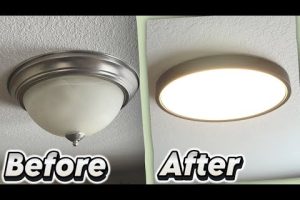



When it comes to illuminating your kitchen with both style and functionality, flush mount kitchen lights have become one of the most popular choices among homeowners and interior designers alike. Unlike recessed fixtures or hanging pendants that demand ceiling clearance, flush mount lights sit snugly against the ceiling, delivering even, widespread illumination without eating into your vertical space. Whether you are renovating a compact city apartment kitchen or upgrading a sprawling open-concept cooking area, understanding how to select, install, and style flush mount lighting can make a dramatic difference in ambiance, visibility, and overall design cohesion. This comprehensive guide covers everything from the different types of flush mount fixtures available to expert installation tips and frequently asked questions that will help you make a confident, informed decision for your space.
What Are Flush Mount Kitchen Lights and Why Do They Matter?
Flush mount kitchen lights are ceiling-mounted fixtures that sit flat against the ceiling surface, with no hanging canopy or dangling component. Also commonly referred to as closet lights, surface mount ceiling lights, or close-to-ceiling fixtures, they are designed to maximize headroom while providing reliable task and ambient lighting. In a kitchen environment, where proper illumination directly impacts safety, productivity, and mood, choosing the right ceiling light is far more than a decorative afterthought.
Flush mount fixtures work exceptionally well in kitchens with lower ceilings, typically those under eight feet, where pendant lights or chandeliers would create an awkward, cramped feeling. They also shine in hallways connecting to the kitchen, laundry rooms adjacent to cooking spaces, and small galley-style layouts where every inch of clearance counts. The key advantage is uniform light distribution — because the fixture sits flat against the ceiling, light spreads outward and downward evenly, eliminating the harsh pools and shadows that uneven lighting can create.
Types of Flush Mount Kitchen Lights
Not all flush mount fixtures are created equal. The market offers a surprisingly diverse range of styles, technologies, and designs tailored to different kitchen aesthetics and lighting needs. Here is a breakdown of the most common types you will encounter.
LED Flush Mount Ceiling Lights
LED flush mount lights represent the most energy-efficient and longest-lasting option on the market today. They consume significantly less power than traditional incandescent or halogen bulbs, often lasting 25,000 hours or more. LED flush mounts come in a variety of color temperatures, from warm 2700K bulbs that create a cozy atmosphere to cool 5000K daylight options ideal for task-oriented food preparation. Many modern LED flush mount fixtures also offer dimmable functionality and smart-home compatibility, allowing you to adjust brightness and color temperature through apps or voice commands.
Flush Mount Pendant Lights
Sometimes called semi-flush mount or mini pendant flush mounts, these fixtures hang just a few inches below the ceiling while still maintaining a compact profile. They add a touch of visual interest and vertical dimension without the dramatic drop of a full pendant light. Flush mount pendants are excellent for kitchen islands or breakfast bars where you want a decorative focal point without sacrificing clearance.
Flush Mount Chandelier-Style Lights
For kitchens with a more formal or transitional design aesthetic, flush mount chandeliers offer the ornamental beauty of a traditional chandelier while keeping a low profile. These fixtures typically feature multiple arms, crystal accents, or sculptural metalwork and are best suited for larger kitchen spaces where they can serve as a stunning centerpiece without overwhelming the room.
Flush Mount Round and Square Fixtures
The shape of your flush mount fixture plays a subtle but important role in your kitchen’s overall feel. Round flush mounts tend to soften angular kitchen designs and work beautifully in circular or curved layouts. Square and rectangular flush mounts complement modern, minimalist, and contemporary kitchen cabinets and countertops, reinforcing clean lines and geometric harmony.
How to Choose the Right Flush Mount Kitchen Light
Selecting the perfect flush mount light for your kitchen involves considering several practical and aesthetic factors. Getting this right ensures your lighting enhances both the usability and the visual appeal of your space.
Matching Fixture Size to Room Dimensions
One of the most common mistakes homeowners make is choosing a flush mount light that is too small or too large for the kitchen. A widely used guideline is the length-and-width rule: add the room’s length and width in feet, and the resulting sum in inches should approximate the fixture’s diameter. For example, a kitchen that is 10 feet by 12 feet would ideally accommodate a flush mount light approximately 22 inches in diameter.
Considering Ceiling Height
While flush mount lights are inherently designed for lower ceilings, there is still a range to consider. Ceilings below 7.5 feet benefit most from slim-profile flush mounts. For ceilings between 8 and 9 feet, you can use slightly bulkier fixtures or even semi-flush mounts that add a small amount of visual depth. Anything above 9 feet might warrant transitioning to a pendant or recessed option, though flush mounts can still work if the kitchen layout is compact.
Aligning Style with Kitchen Decor
Your flush mount kitchen light should complement, not compete with, your existing design elements. Consider the finish of your cabinet hardware, faucet, and backsplash when selecting a fixture. Popular finishes include brushed nickel, matte black, brushed brass, and polished chrome. Here is a quick reference:
- Modern/Minimalist kitchens: Clean-lined LED flush mounts in matte black or white
- Farmhouse/Rustic kitchens: Wrought iron or aged bronze flush mounts with warm bulbs
- Traditional kitchens: Crystal or brass-accented flush mount chandeliers
- Industrial kitchens: Black iron or copper flush mounts with exposed bulb aesthetics
Benefits of Choosing Flush Mount Kitchen Lights
There are numerous advantages to installing flush mount lighting in your kitchen beyond the obvious space-saving benefit. Understanding these advantages can help you justify the investment and communicate the value to anyone involved in your renovation.
- Maximized Headroom — Flush mount fixtures sit entirely against the ceiling, preserving every inch of vertical clearance, which is critical in smaller kitchens or those with standard 8-foot ceilings.
- Even Light Distribution — Because the light source is centered and close to the ceiling, illumination spreads uniformly across the room, reducing dark corners and harsh shadows on countertops.
- Easy Installation — Compared to recessed lighting, which requires drywall cutting and electrical box adjustments, flush mount lights typically mount with just a few screws and a standard ceiling electrical box.
- Versatile Design Options — From sleek futuristic LED panels to classic ornate fixtures, flush mount lights span every design genre, making it easy to find one that fits your vision.
- Cost-Effective — Flush mount fixtures tend to be more affordable than chandeliers or high-end pendants, and LED versions offer long-term energy savings that reduce electricity bills.
- Low Maintenance — With no dangling components to collect dust or sway in drafts, flush mount lights are easier to clean and maintain over time.
Flush Mount vs. Other Kitchen Lighting Mount Types
Understanding how flush mount lights compare to alternative mounting styles helps clarify why they might be the right choice for your specific kitchen. The table below outlines key differences.
| Feature | Flush Mount | Recessed (Canister) | Pendant | Semi-Flush |
| Ceiling Clearance Needed | Minimal (flat to ceiling) | Requires cutout in drywall | Significant hanging length | Slight drop (3-6 inches) |
| Best For Ceiling Height | Under 9 feet | Any height | 9+ feet preferred | Under 9 feet |
| Light Distribution | Wide, even spread | Directional, focused | Concentrated below fixture | Moderate spread |
| Installation Complexity | Simple | Moderate to complex | Moderate | Simple |
| Design Versatility | High | Limited (hidden fixture) | Very high (many styles) | Moderate |
| Cost Range | Low to moderate | Moderate to high | Low to very high | Low to moderate |

Installation Tips and Electrical Considerations
While many flush mount kitchen lights are designed for straightforward DIY installation, there are important safety and performance considerations to keep in mind. If your kitchen does not already have a ceiling electrical box at the desired location, you will need to hire a licensed electrician to install one. Always ensure the circuit is turned off at the breaker before beginning any electrical work.
When mounting your flush mount fixture, use the appropriate hardware for your ceiling type. Standard wooden ceilings accept basic screws, but plaster or drywall-only ceilings may require toggle bolts or specialty anchors to support the fixture’s weight securely. If you are upgrading from an older fixture, check the existing wiring for frayed insulation or outdated connections, and replace any damaged components before proceeding.
For the best lighting results, consider installing LED bulbs with a Color Rendering Index (CRI) of 90 or above. High CRI bulbs render colors more accurately, which is especially important in a kitchen where you need to assess the freshness of ingredients and the doneness of cooked food. Additionally, placing flush mount lights centrally above the kitchen island or main work triangle ensures that task areas receive consistent, glare-free illumination.
Expert Tips for Maximizing Your Flush Mount Kitchen Lighting
Even the best flush mount fixture can underperform if it is not deployed strategically. Here are some professional recommendations that elevate a standard installation into a truly exceptional lighting design.
- Layer Your Lighting — Use flush mount lights as your ambient base layer, then supplement with under-cabinet LED strips for task lighting and toe-kick lights for safety. Layered lighting creates depth and dimension that a single fixture cannot achieve alone.
- Use Dimmers — Installing a dimmer switch with your flush mount kitchen lights allows you to transition from bright task lighting during meal prep to soft, ambient glow during evening entertaining.
- Choose Open-Design Fixtures — Fixtures with open sides or frosted diffusers distribute light more evenly than enclosed designs, reducing the harsh direct-beam effect that can cause eye strain.
- Consider Smart Bulbs — Smart LED bulbs compatible with Alexa, Google Home, or Apple HomeKit let you control color temperature and brightness remotely, adding convenience and modern appeal to your kitchen.
- Clean Fixtures Regularly — Flush mount lights collect dust on their shades and lenses over time, which can reduce light output by up to 30%. A quick wipe-down every two weeks keeps them performing at full brightness.
Conclusion
Flush mount kitchen lights represent one of the most practical, versatile, and visually effective lighting solutions available for modern kitchens. Whether you prioritize energy efficiency with an LED flush mount panel, seek a decorative statement with a flush mount chandelier, or need a compact fixture for a small galley kitchen, the right flush mount light can transform your space from ordinary to extraordinary. By considering room size, ceiling height, style compatibility, and proper installation techniques, you can confidently select a fixture that delivers both beauty and performance for years to come.
FAQs About Flush Mount Kitchen Lights
What is the best flush mount kitchen light for a small kitchen?
For small kitchens, a slim-profile LED flush mount light in a light color such as white or brushed nickel is ideal. Choose a fixture with a diameter of 12 to 18 inches and a brightness of at least 800 lumens to ensure adequate illumination without overwhelming the limited space. Dimmable models offer added flexibility for adjusting light levels throughout the day.
Can I install a flush mount kitchen light myself?

Yes, most flush mount kitchen lights are designed for straightforward DIY installation, provided you have a ceiling-mounted electrical box already in place. You will need basic tools including a screwdriver, wire nuts, and a voltage tester. If there is no existing electrical box or if you are uncomfortable working with electrical wiring, always consult a licensed electrician to ensure safe and code-compliant installation.
How bright should a flush mount kitchen light be?
For general kitchen illumination, aim for approximately 30 to 40 lumens per square foot of space. A kitchen measuring 100 square feet would require a flush mount fixture producing around 3,000 to 4,000 lumens total. If the fixture uses multiple bulbs, you can achieve this output with a combination of lower-wattage LEDs rather than a single high-wattage source.
What color temperature is best for flush mount kitchen lights?
Color temperature plays a significant role in the mood and functionality of your kitchen. For a warm, inviting atmosphere suited to casual dining and entertaining, choose 2700K to 3000K warm white bulbs. For task-oriented cooking and food preparation, 3500K to 4000K neutral white provides better visibility and color accuracy. Cool 5000K daylight bulbs work well in modern, minimalist kitchens but can feel harsh in smaller spaces.
Are flush mount lights outdated for modern kitchens?
Not at all. Flush mount kitchen lights have evolved significantly with modern design trends, and they remain a staple in contemporary kitchen lighting. Today’s flush mount fixtures feature sleek LED technology, smart-home integration, minimalist silhouettes, and premium finishes that complement modern, transitional, Scandinavian, and even industrial kitchen designs. Their space-saving profile and versatile aesthetics make them a timeless and current choice for kitchens of all styles and sizes.